eMcontrol Servo Controller
eMcontrol Servo Controller
NI CompactRIO based Realtime controls
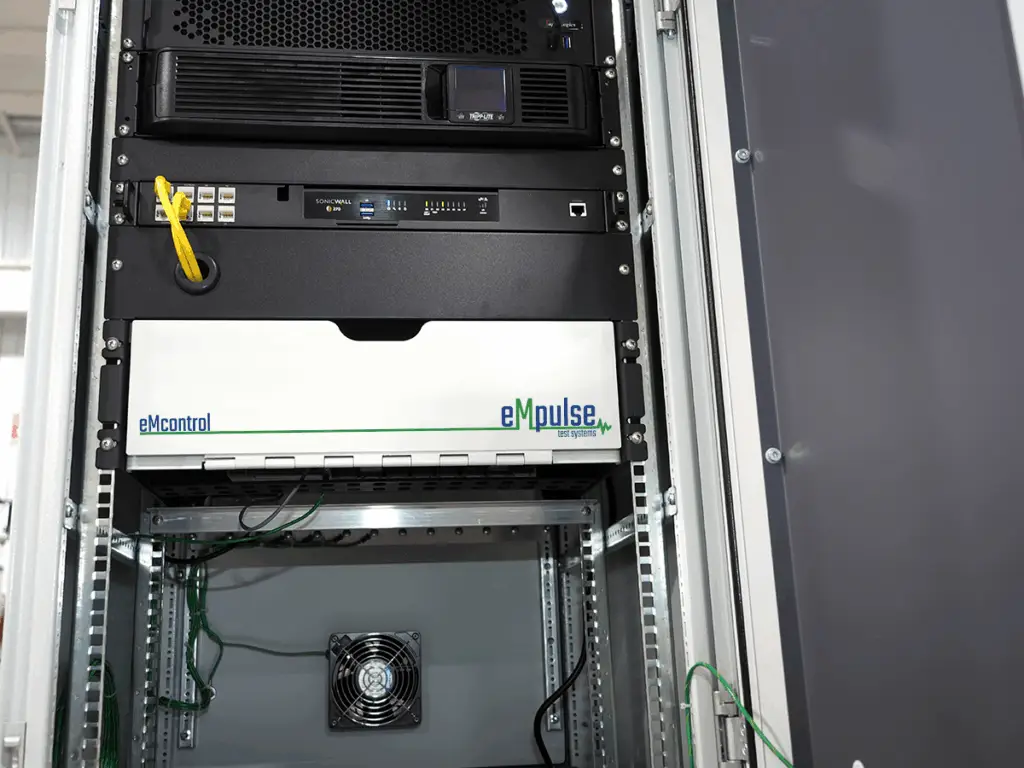
The eMcontrol real-time servo controller is a flexible servo hydraulic test controller and servoelectric control platform compatible with both eMpulse servoelectric systems and existing servohydraulic test systems. By supporting both technologies, eMcontrol provides a cost-effective upgrade path, enabling phased replacement of hydraulic components without requiring a full overhaul of the servo controller software or control architecture.
Off the Shelf Hardware
Partnering with National Instruments provides a robust, off-the-shelf hardware foundation for the servo controller, ensuring global availability of components, simplified maintenance, and long-term support for mission-critical test environments.
Support PROFINET and EtherCAT
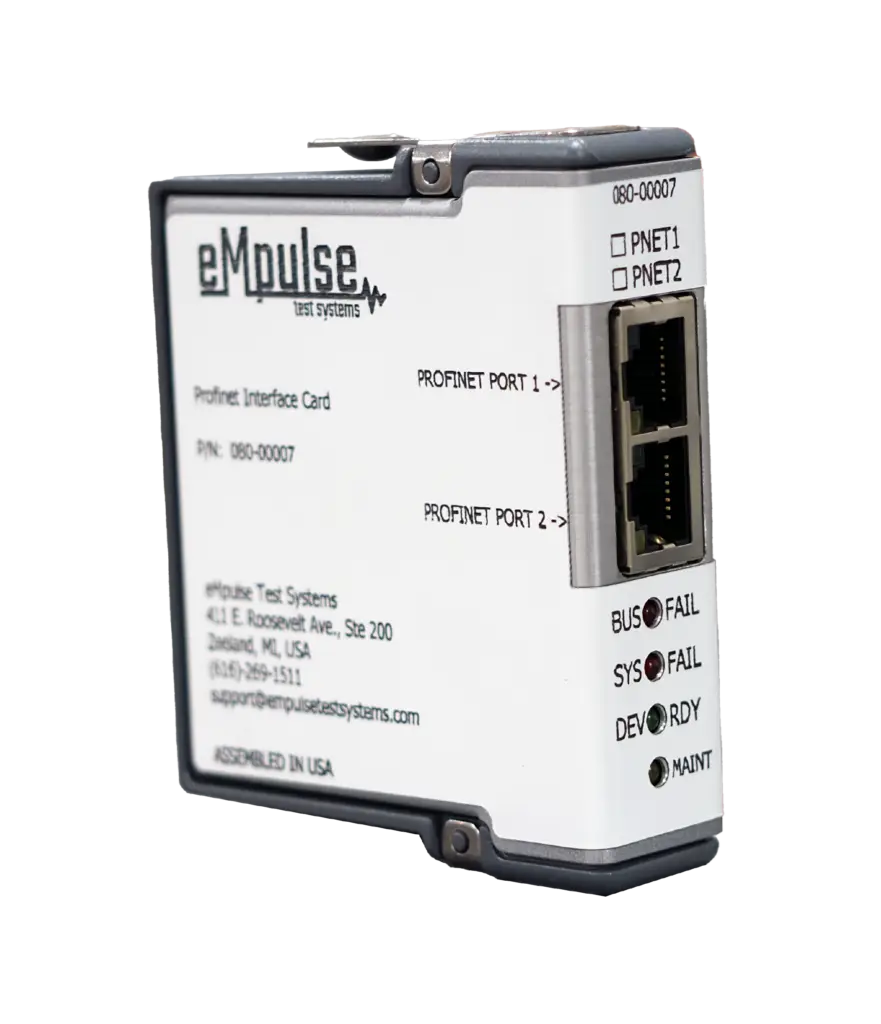
Our servo controller software can handle Real-Time industrial ethernet communications for failsafe digital interaction with a wide variety of equipment. Working in the digital space compared to analog wired systems allows us to efficiently debug, commission or upgrade your system remotely more efficiently.
Flexible Intuitive Software
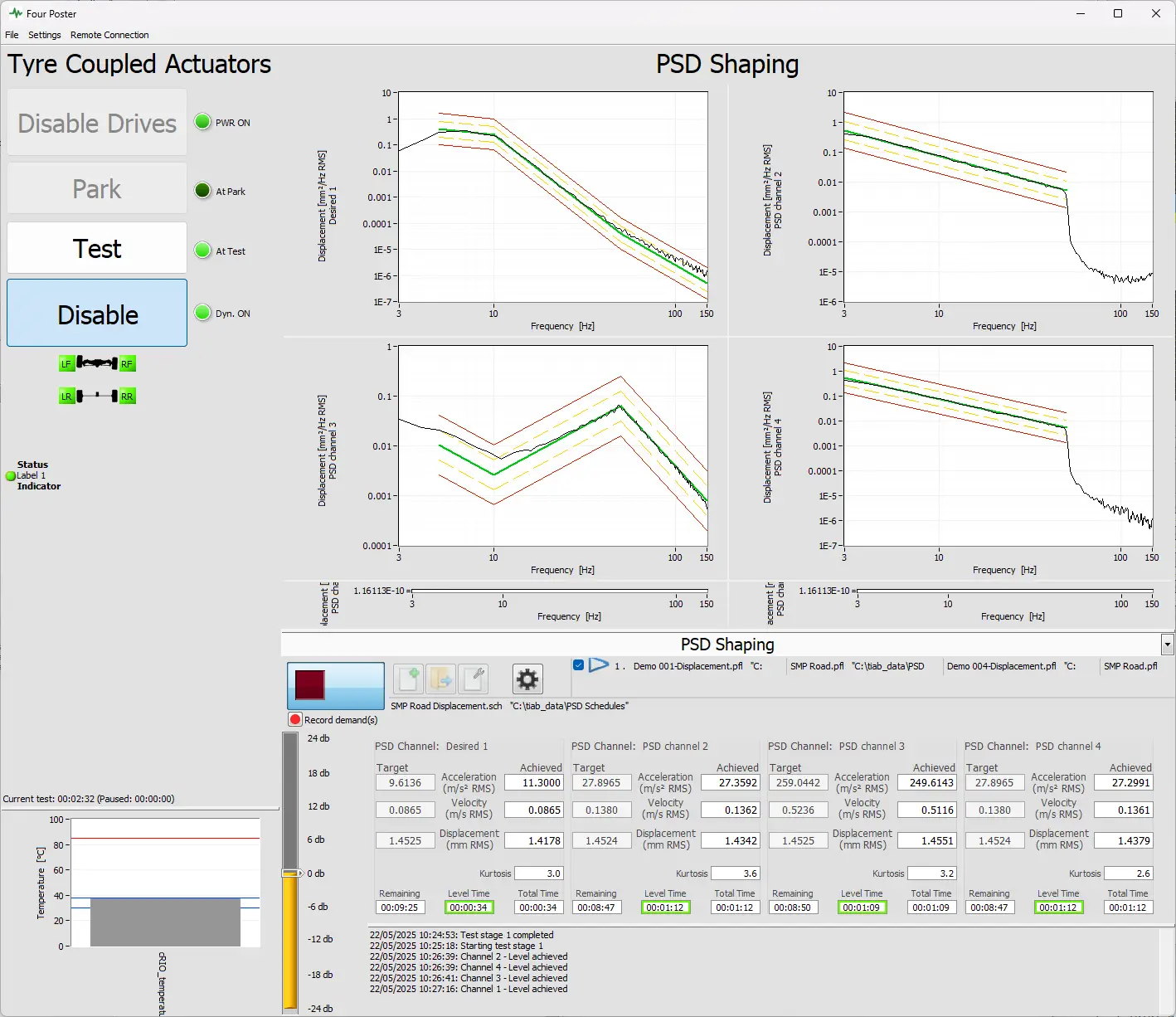
Our core software handles all the control needs of your application. Add-on software will optimize your user experience and allow you to get the most out of your equipment.
Language Support
Our default language in the User Interface is English, but our software is written to handle any language. Ask eMpulse for a quote to provide the language you prefer. Common examples include French, German, and Mandarin.
Dynamic Software Development
Our engineering team collaborates directly with customers to adapt the servo controller software for application-specific test requirements, including custom control logic, integration with existing test systems, and hybrid servo hydraulic test controller configurations.
High Fidelity
Our hardware and software fully support processing of signals with 32-bit resolution. Using the digital sensors and Real-Time network, the servo controller can process extremely high resolution signals without drift or noise. SEA actuator displacement are processed with 10nm resolution (0.000001mm).
Wide array of sensor or protocol-specific I/O modules
- Voltage (16 and 24 bit)
- Communication Protocols (PROFINET, EtherCAT & CAN)
- Digital
- Temperature
- Strain/Bridge
- Sound and Vibration
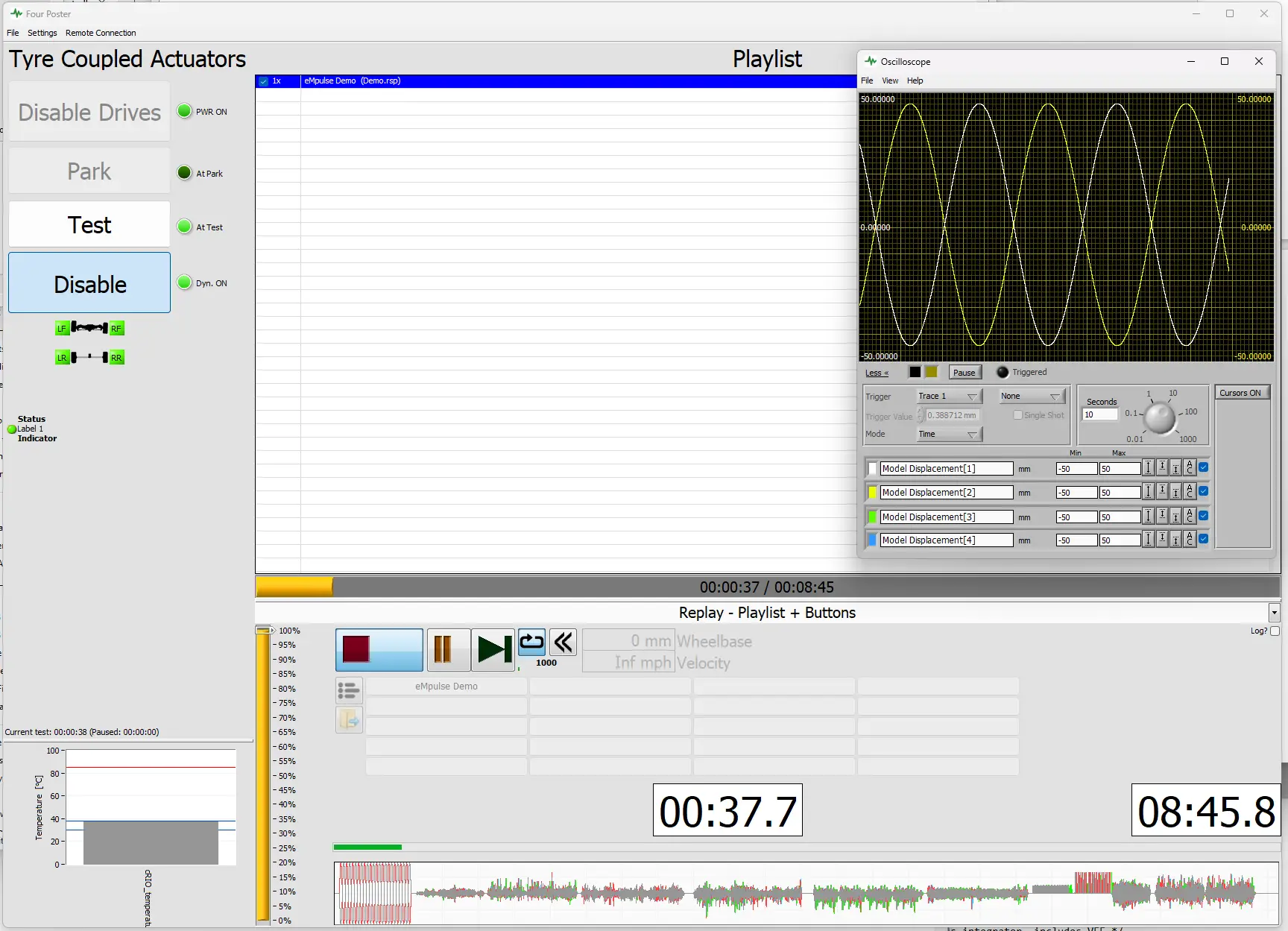
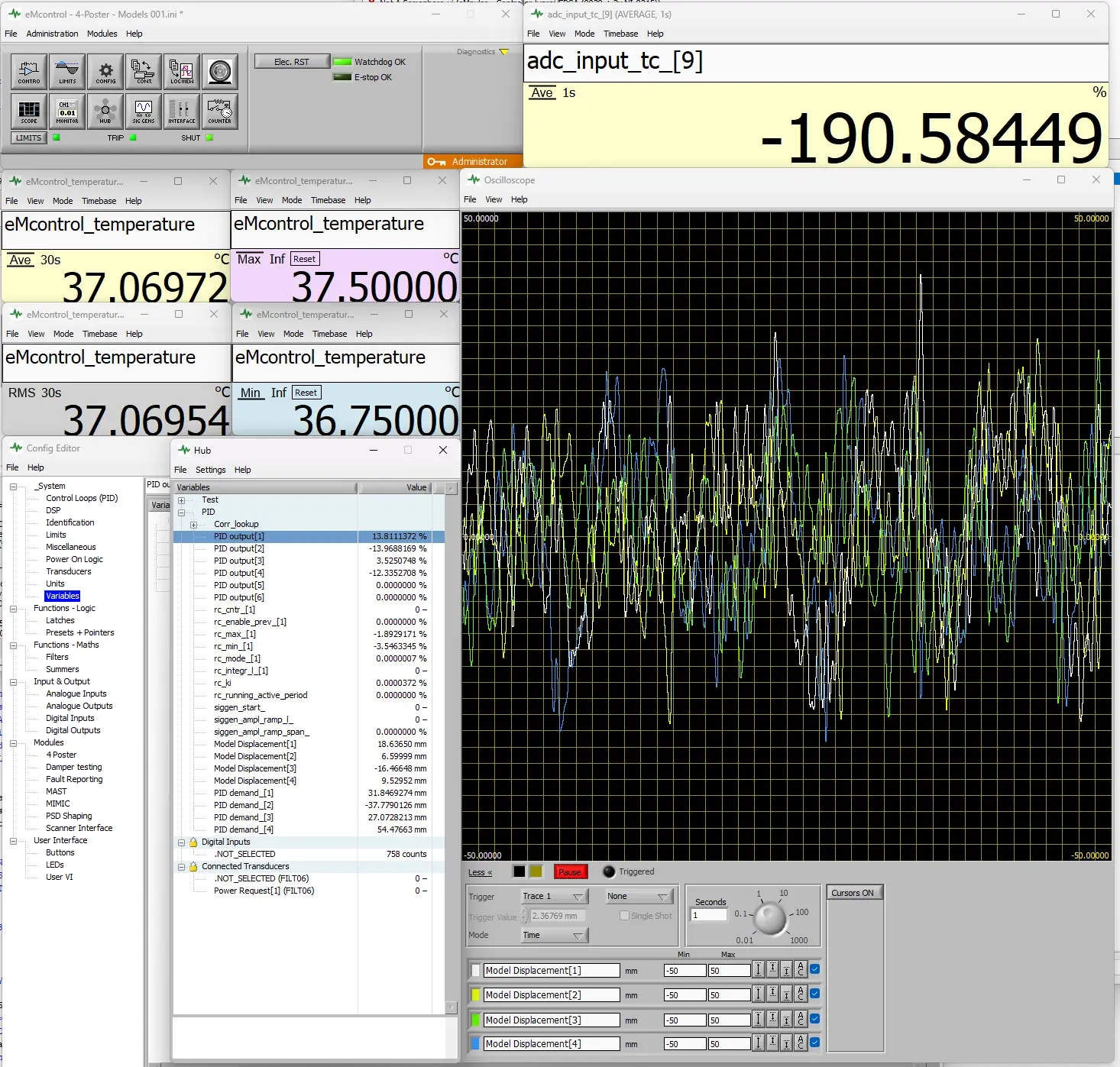
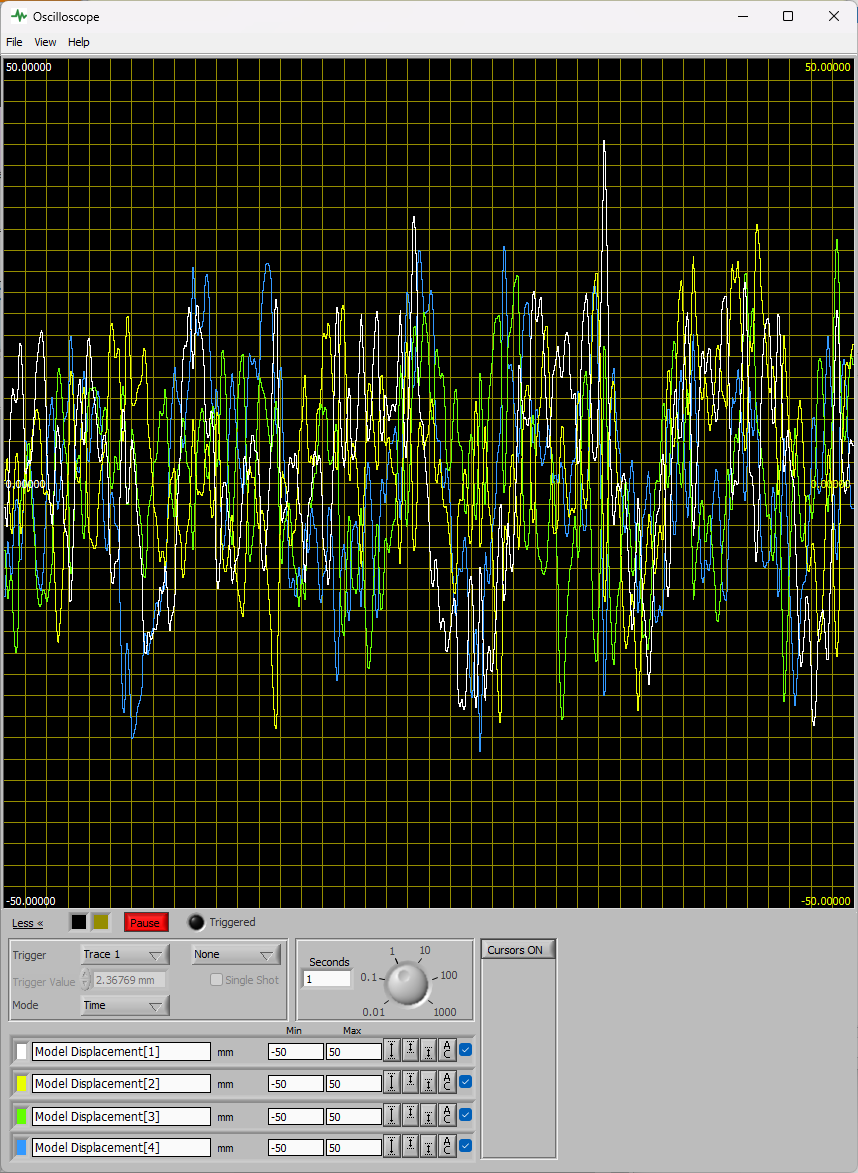
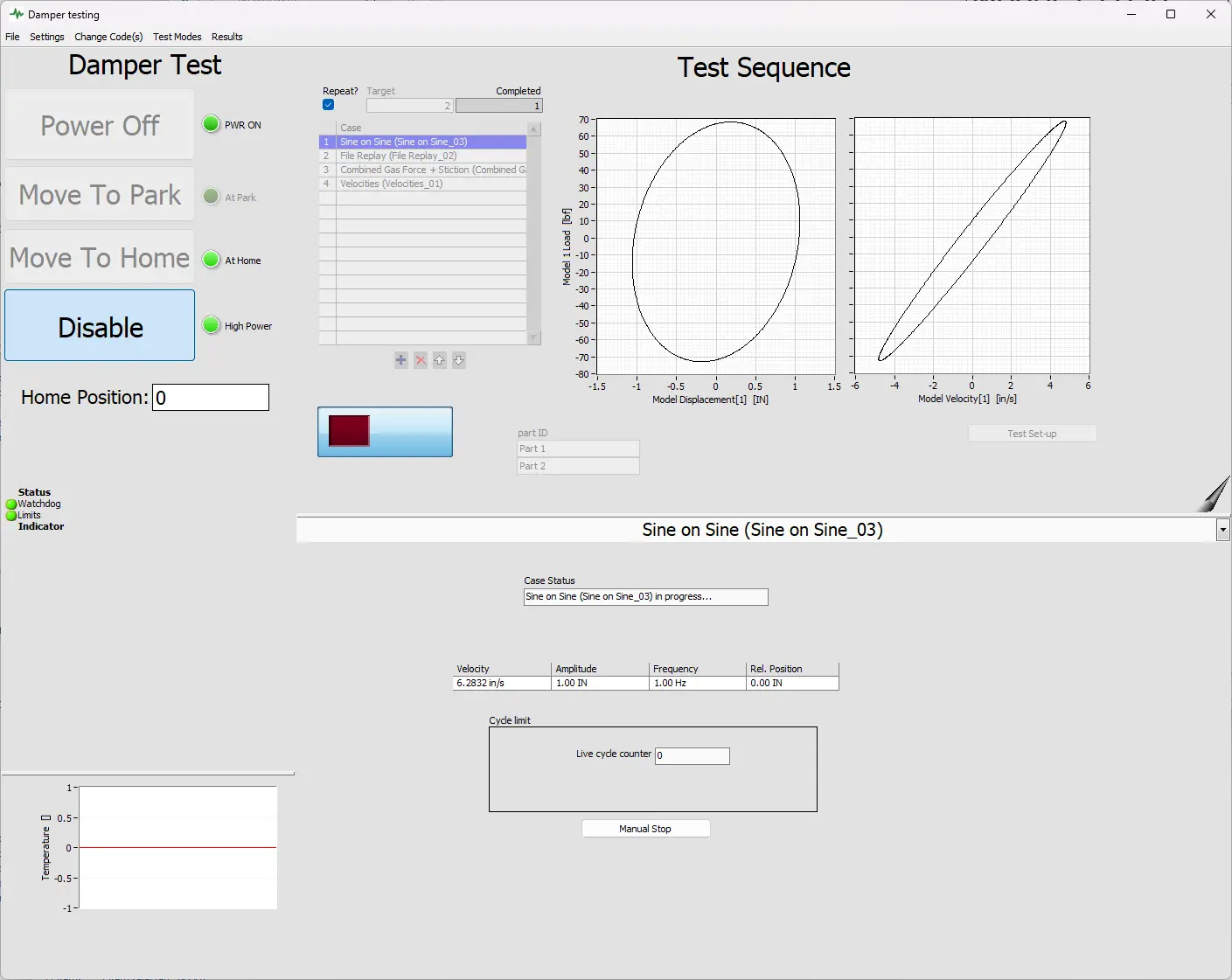
NI CompactRIO based Realtime controls
The eMcontrol real-time servo controller is a flexible servo hydraulic test controller and servoelectric control platform compatible with both eMpulse servoelectric systems and existing servohydraulic test systems. By supporting both technologies, eMcontrol provides a cost-effective upgrade path, enabling phased replacement of hydraulic components without requiring a full overhaul of the servo controller software or control architecture.
Off the Shelf Hardware
Partnering with National Instruments provides a robust, off-the-shelf hardware foundation for the servo controller, ensuring global availability of components, simplified maintenance, and long-term support fornmission-critical test environments.
Language Support
Our default language in the User Interface is English, but our software is written to handle any language. Ask eMpulse for a quote to provide the language you prefer.
Flexible Intuitive Software
Our core software handles all the control needs of your application. Add-on software will optimize your user experience and allow you to get the most out of your equipment.
Support PROFINET and EtherCAT
Our servo controller software can handle Real-Time industrial ethernet communications for failsafe digital interaction with a wide variety of equipment. Working in the digital space compared to analog wired systems allows us to efficiently debug, commission or upgrade your system remotely more efficiently.
Dynamic Software Development
Our engineering team collaborates directly with customers to adapt the servo controller software for application-specific test requirements, including custom control logic, integration with existing test systems, and hybrid servo hydraulic test controller configurations.
High Fidelity
Our hardware and software fully support processing of signals with 32-bit resolution. Using the digital sensors and Real-Time network, the servo controller can process extremely high resolution signals without drift or noise. SEA actuator displacement are processed with 10nm resolution (0.000001mm).
Wide array of sensor or protocol-specific I/O modules
- Voltage (16 and 24 bit)
- Communication Protocols (PROFINET, EtherCAT & CAN)
- Digital
- Temperature
- Strain/Bridge
- Sound and Vibration
TIAB Servo Controller
Originally developed by EST, the TIAB remains supported by eMpulse, which continues to offer full service and technical assistance for this legacy system.
Frequently Asked Questions
Yes. Hybrid controllers like eMcontrol are designed to support both servohydraulic and servoelectric machines. This is useful for labs that operate mixed equipment or plan to transition from hydraulics to electric actuation without replacing their entire control platform.
Closed-loop control means the controller is constantly comparing what the test is doing to what it is supposed to be doing. If force, displacement or motion starts to drift from the target, the controller corrects it immediately. This is what keeps results stable and repeatable, especially over long or demanding tests.
Real-time control ensures the system responds within guaranteed time limits. That timing consistency matters most during dynamic, vibration, or fatigue testing, where even small delays or variation in timing (jitter) can affect load accuracy and overall test validity.
Some older systems are still supported through service, spare parts, and technical assistance. This allows facilities to keep existing equipment running while planning upgrades or system replacements on their own timeline, rather than being forced into immediate changes.
Frequently Asked Questions
A servo hydraulic test controller manages how force, displacement, or motion is applied during a test. In day-to-day use, it sits at the center of the test system, reading sensor feedback and adjusting actuator output in real time so the machine behaves the way the test requires, whether that is a slow static pull or a high-speed fatigue cycle.
The software handles much more than just control loops. It coordinates test sequencing, data acquisition, safety logic, and communication with sensors and actuators. In practice, it is what turns a collection of hardware into a usable, repeatable test system that operators can trust.
Yes. Hybrid controllers like eMcontrol are designed to support both servohydraulic and servoelectric machines. This is useful for labs that operate mixed equipment or plan to transition from hydraulics to electric actuation without replacing their entire control platform.
Closed-loop control means the controller is constantly comparing what the test is doing to what it is supposed to be doing. If force, displacement or motion starts to drift from the target, the controller corrects it immediately. This is what keeps results stable and repeatable, especially over long or demanding tests.
Real-time control ensures the system responds within guaranteed time limits. That timing consistency matters most during dynamic, vibration, or fatigue testing, where even small delays or variation in timing (jitter) can affect load accuracy and overall test validity.
Modern servo controllers rely on real-time industrial Ethernet protocols such as PROFINET, EtherCAT, and CAN. These protocols allow synchronized communication between controllers, sensors, actuators, and safety devices while maintaining deterministic performance.
Accuracy comes from a combination of high-resolution sensors, fast signal processing, and stable control algorithms. Modern controllers are capable of very precise force and motion control with low noise and minimal drift, even in demanding durability or vibration applications.
Yes. Many test programs require custom control logic, unique test sequences, or integration with proprietary sensors and fixtures. Servo controller software is often tailored to meet those needs, particularly in advanced research, development, and production validation environments.
Some older systems are still supported through service, spare parts, and technical assistance. This allows facilities to keep existing equipment running while planning upgrades or system replacements on their own timeline, rather than being forced into immediate changes.