
Dual Axis Electrodynamic Shaker
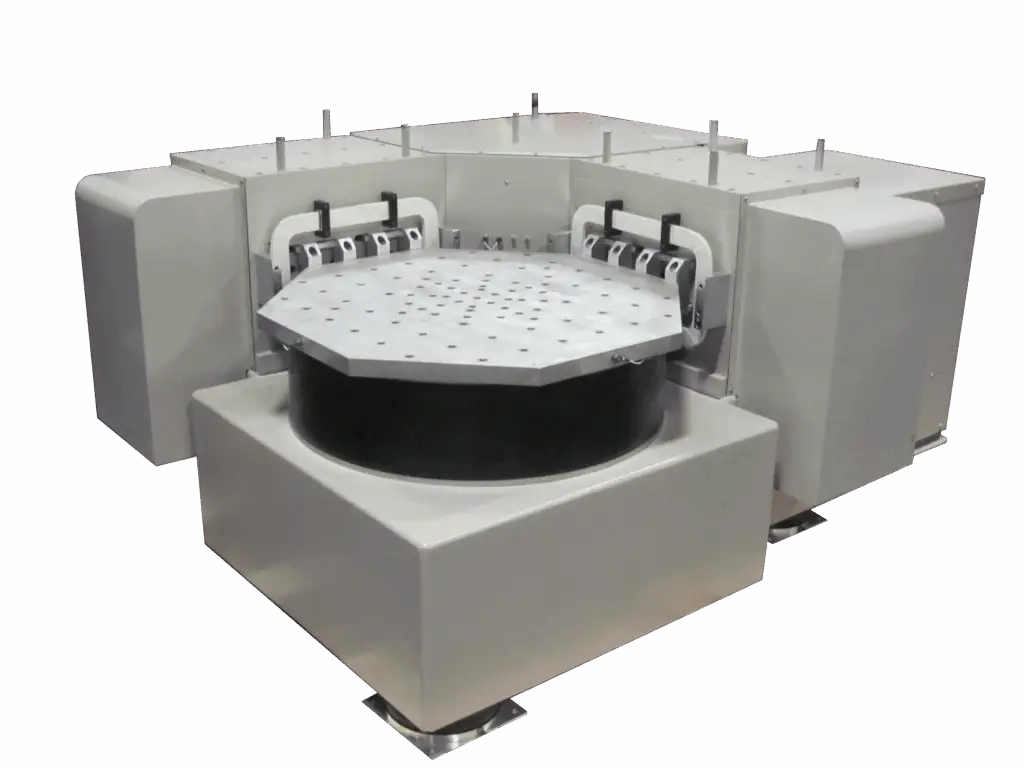
Dual Axis Electrodynamic Shaker
Dual Axis Electrodynamic Shaker
Servoelectric Dual Axis Electrodynamic Shakers
The Dual Axis Electrodynamic Shaker from eMpulse Test Systems delivers fast, precise, and efficient vibration testing. As a dual-axis electrodynamic shaker, the system enables true multi-axis vibration testing by applying controlled vibration in two perpendicular axes simultaneously, reducing test cycle time, minimizing handling, and providing more realistic simulations of real-world conditions. This multi-axis shaker platform is designed for multi-directional vibration testing where product exposure to combined dynamic loads is critical.
This system is ideal for both product qualification and high-volume production screening, particularly in applications where traditional single axis vibration testing does not accurately represent in-field operating environments.
- Save Time in Production Screening In high-throughput environments, every minute counts. Dual axis vibration shakers reduce test time by enabling multi directional vibration testing in a single setup, helping you get parts out the door faster without sacrificing quality.
- Reduce Labor and Setup Traditional 3-axis testing requires three separate setups. With a dual-axis shaker, you eliminate one, saving time and reducing handling errors.
- Increase Defect Detection Without Overstress Tailor stress profiles on each axis to detect latent manufacturing issues while avoiding unnecessary damage to parts. Independent axis control allows multi axis shakers to expose products to realistic combined stresses without excessive overtesting.
- Test Under More Realistic Conditions Real-world environments apply forces in multiple directions at once. Multi directional vibration testing more accurately replicates these real world load conditions more than traditional single-axis testing methods, improving correlation and confidence.
Servoelectric Dual Axis Electrodynamic Shakers
The Dual Axis Electrodynamic Shaker from eMpulse Test Systems delivers fast, precise, and efficient vibration testing. As a dual-axis electrodynamic shaker, the system enables true multi-axis vibration testing by applying controlled vibration in two perpendicular axes simultaneously, reducing test cycle time, minimizing handling, and providing more realistic simulations of real-world conditions. This multi-axis shaker platform is designed for multi-directional vibration testing where product exposure to combined dynamic loads is critical.
This system is ideal for both product qualification and high-volume production screening, particularly in applications where traditional single axis vibration testing does not accurately represent in-field operating environments.
- Save Time in Production Screening In high-throughput environments, every minute counts. Dual axis vibration shakers reduce test time by enabling multi directional vibration testing in a single setup, helping you get parts out the door faster without sacrificing quality.
- Reduce Labor and Setup Traditional 3-axis testing requires three separate setups. With a dual-axis shaker, you eliminate one, saving time and reducing handling errors.
- Increase Defect Detection Without Overstress Tailor stress profiles on each axis to detect latent manufacturing issues while avoiding unnecessary damage to parts. Independent axis control allows multi axis shakers to expose products to realistic combined stresses without excessive overtesting.
- Test Under More Realistic Conditions Real-world environments apply forces in multiple directions at once. Multi directional vibration testing more accurately replicates these real world load conditions more than traditional single-axis testing methods, improving correlation and confidence.
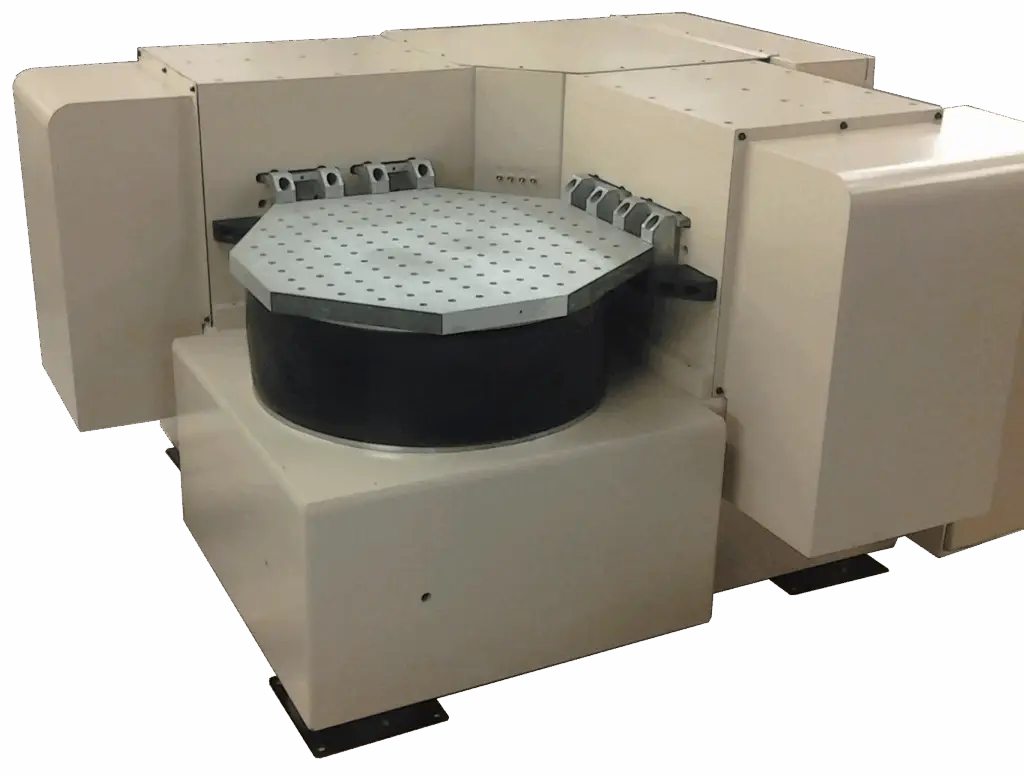
Advantages of Dual Axis Electrodynamic Shakers
Simultaneous Dual-Axis Vibration
Enables testing in two perpendicular axes at the same time, supporting efficient multi axis vibration testing with improved realism and reduced test duration.
Independent Axis Control
Allows for different vibration profiles on each axis, such as NAVMAT profiles for military-grade testing, enabling precise multi directional vibration testing tailored to application specific requirements.
Reduced Overstress Risk
Spectrum shaping capabilities help minimize vibration stress while maximizing defect detection.
Advanced Cooling System
Air-cooled design enhances heat dissipation and minimizes noise.
Large Slip Plate Working Surface
Accommodates a variety of product sizes, improving throughput and testing flexibility.
High-Precision Oil Film Slip Table
Utilizes a precision-ground granite surface with an oil safety interlock system for stability and safety.
Digital Amplification System
Converts over 90% of available power into usable output, ensuring efficient operation for high demand multi axis shaker test profiles.
Customizable Testing Modes
- Simultaneous Dual-Axis Random
- Single Axis Random (either axis)
- Single Axis Sine (either axis)
Advantages of Dual Axis Electrodynamic Shakers
Simultaneous Dual-Axis Vibration
Enables testing in two perpendicular axes at the same time, increasing efficiency and accuracy.
Independent Axis Control
Allows for different vibration profiles on each axis, such as NAVMAT profiles for military-grade testing.
Reduced Overstress Risk
Spectrum shaping capabilities help minimize vibration stress while maximizing defect detection.
Advanced Cooling System
Air-cooled design enhances heat dissipation and minimizes noise.
Large Slip Plate Working Surface
Accommodates a variety of product sizes, improving throughput and testing flexibility.
High-Precision Oil Film Slip Table
Utilizes a precision-ground granite surface with an oil safety interlock system for stability and safety.
Digital Amplification System
Converts over 90% of available power into usable output, ensuring efficient operation.
Customizable Testing Modes
- Simultaneous Dual-Axis Random
- Single Axis Random (either axis)
- Single Axis Sine (either axis)
Dual Axis Electrodynamic Shaker Specifications
| Capabilities | Specifications |
|---|---|
|
Frequency Range |
5–2000 Hz (sine), 20–2000 Hz (random) |
|
Max Displacement |
1.0 inch peak-to-peak (velocity-limited) |
|
Payload Capacity (Random Testing) |
Up to 200 lbs @ 6 GRMS; 130 lbs @ 10 GRMS |
|
Overturning Moment |
35,000 lb-in |
|
Power Requirement |
600V, 3-phase, 60 Hz |
Advantages of Dual Axis Electrodynamic Shakers
Simultaneous Dual-Axis Vibration
Enables testing in two perpendicular axes at the same time, supporting efficient multi axis vibration testing with improved realism and reduced test duration.
Independent Axis Control
Allows for different vibration profiles on each axis, such as NAVMAT profiles for military-grade testing, enabling precise multi directional vibration testing tailored to application specific requirements.
Reduced Overstress Risk
Spectrum shaping capabilities help minimize vibration stress while maximizing defect detection.
Advanced Cooling System
Air-cooled design enhances heat dissipation and minimizes noise.
Large Slip Plate Working Surface
Accommodates a variety of product sizes, improving throughput and testing flexibility.
High-Precision Oil Film Slip Table
Utilizes a precision-ground granite surface with an oil safety interlock system for stability and safety.
Digital Amplification System
Converts over 90% of available power into usable output, ensuring efficient operation for high demand multi axis shaker test profiles.
Customizable Testing Modes
- Simultaneous Dual-Axis Random
- Single Axis Random (either axis)
- Single Axis Sine (either axis)
Dual Axis Electrodynamic Shaker Specifications
| Capabilities | Specifications |
|---|---|
|
Frequency Range |
5–2000 Hz (sine), 20–2000 Hz (random) |
|
Max Displacement |
1.0 inch peak-to-peak (velocity-limited) |
|
Payload Capacity (Random Testing) |
Up to 200 lbs @ 6 GRMS; 130 lbs @ 10 GRMS |
|
Overturning Moment |
35,000 lb-in |
|
Power Requirement |
600V, 3-phase, 60 Hz |
Dual Axis Electrodynamic Shaker Specifications
| Capabilities | Specifications |
|---|---|
|
Frequency Range |
5–2000 Hz (sine), 20–2000 Hz (random) |
|
Max Displacement |
1.0 inch peak-to-peak (velocity-limited) |
|
Payload Capacity (Random Testing) |
Up to 200 lbs @ 6 GRMS; 130 lbs @ 10 GRMS |
|
Overturning Moment |
35,000 lb-in |
|
Power Requirement |
600V, 3-phase, 60 Hz |
Frequently Asked Questions
A dual-axis electrodynamic shaker applies vibration in two perpendicular directions at the same time. It is typically used when products experience combined vibration in service and when testing one axis at a time does not adequately represent how the product is actually loaded.
Single-axis testing excites one direction per setup, often requiring multiple reorientations of the test article. Dual-axis testing applies vibration in two directions simultaneously, which can improve realism and reduce the number of test setups needed.
Multi-axis vibration testing refers to exposing a product to vibration in more than one direction at the same time. The goal is not complexity for its own sake, but a closer match to real operating environments where loads rarely act along a single axis.
Multi-directional vibration testing is often used to uncover fatigue issues, assembly weaknesses, or defects that may not show up during single-axis testing. It is commonly applied during qualification, production screening, and accelerated reliability programs.
Dual-axis systems are used across aerospace and defense qualification testing, automotive and electric vehicle component validation, electronics screening, and industrial product testing. They are most valuable in applications where vibration exposure is complex but does not require full six-degree-of-freedom simulation.
It can. By exciting two axes at once, overall test time can often be reduced compared to running multiple single-axis tests sequentially. This is especially beneficial in production or screening environments where throughput matters.
Yes. Each axis is typically controlled independently, which allows different vibration profiles, frequency ranges, or amplitudes to be applied simultaneously. This flexibility is important when different directions experience different loading conditions in service.
Yes. Dual-axis shakers are used in both qualification and production screening. They offer a practical balance between test realism, efficiency, and repeatability without the overhead of more complex systems.
Applying combined vibration stresses at the same time can expose weaknesses that remain hidden during single-axis tests. This includes marginal assemblies, loose fasteners, or fatigue-prone features that only fail under combined loading.
Dual-axis systems are often chosen when two-direction excitation provides enough realism for the application. They offer a middle ground between single-axis testing and full six-degree-of-freedom systems, with lower complexity, lower cost, and simpler integration.