
Vibration Fixtures
Vibration Fixtures
Testing Vibration Fixtures Designed for Accuracy & Stability
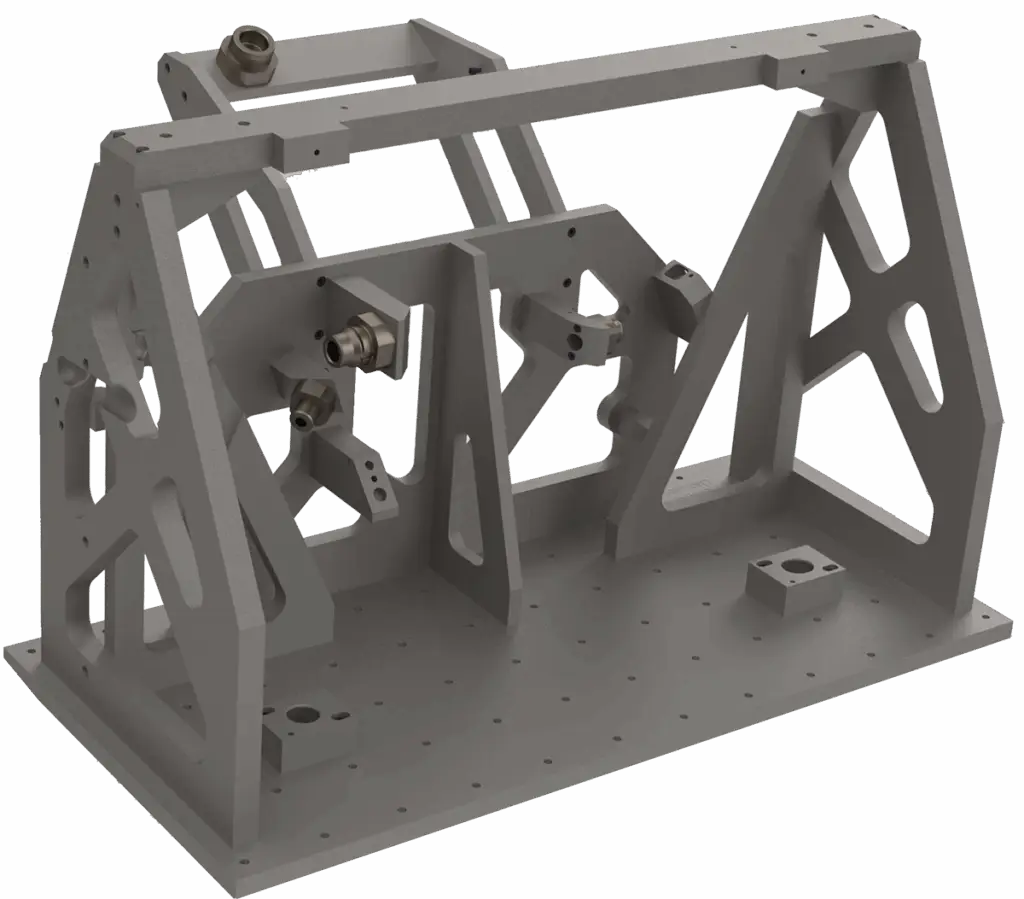
At eMpulse Test Systems, we do more than manufacture vibration test fixtures — we are a vibration fixture manufacturer specializing in precision fixture design for high-fidelity testing environments. Poorly designed fixtures introduce resonances, false positives, and inaccurate test data, compromising the integrity of vibration testing. Our vibration fixtures are engineered using vibration dynamics analysis and structural modeling to eliminate unintended resonances, ensuring clean, repeatable results across all test conditions.
As an experienced vibration fixture manufacturer, eMpulse designs vibration test fixtures that maintain stiffness, mass balance, and dynamic integrity across demanding frequency ranges and load conditions.
- Automotive & Aerospace: Engine mounts, avionics, and battery packs require resonance-free testing to ensure durability and safety.
- Defense & Military: Shock and vibration testing for ruggedized systems where failure is not an option.
- Industrial & Consumer Electronics: Ensuring products withstand real-world conditions by eliminating fixture-induced errors in testing.

Testing Vibration Fixtures Designed for Accuracy & Stability
- Automotive & Aerospace: Engine mounts, avionics, and battery packs require resonance-free testing to ensure durability and safety.
- Defense & Military: Shock and vibration testing for ruggedized systems where failure is not an option.
- Industrial & Consumer Electronics: Ensuring products withstand real-world conditions by eliminating fixture-induced errors in testing.
Test Fixtures
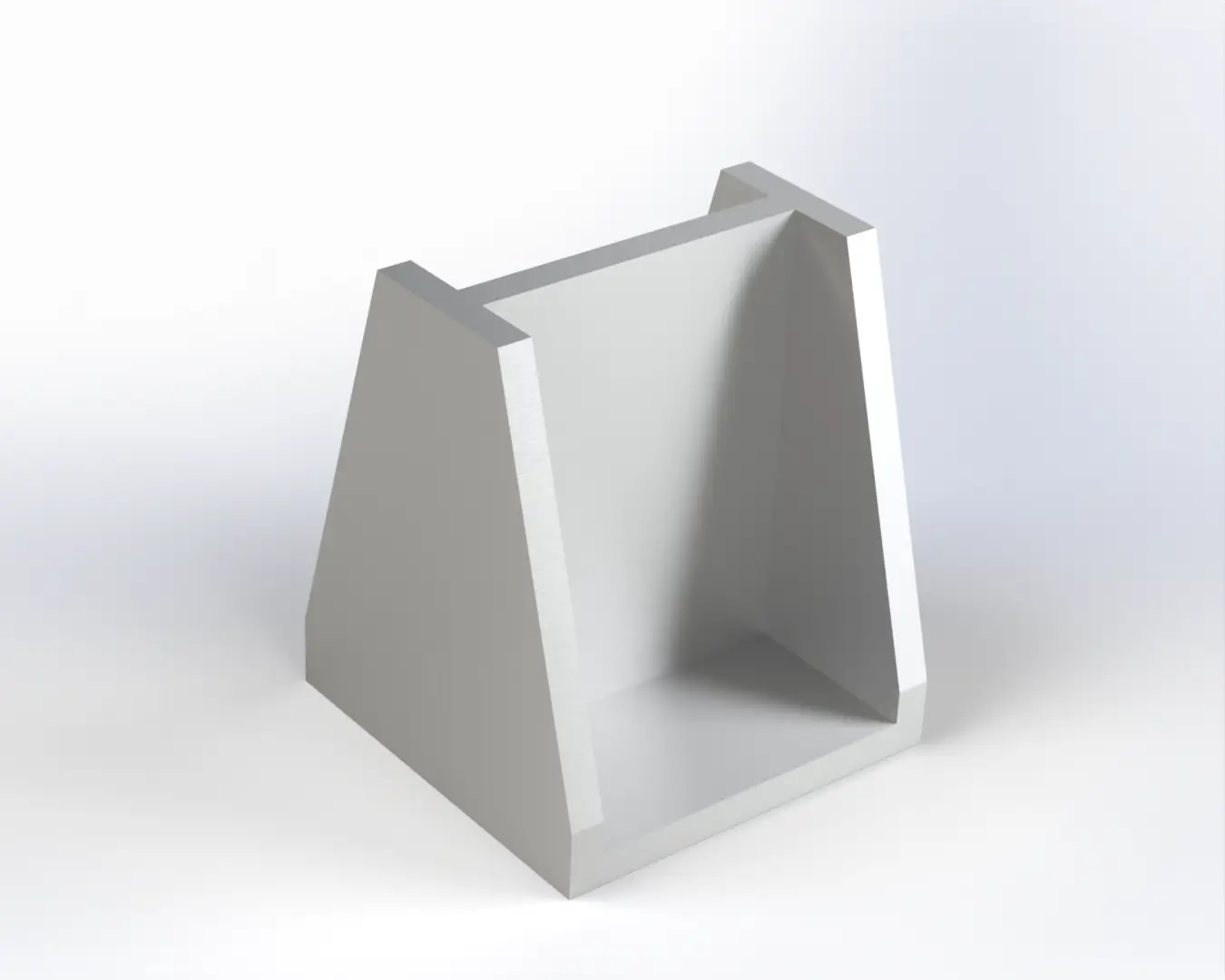
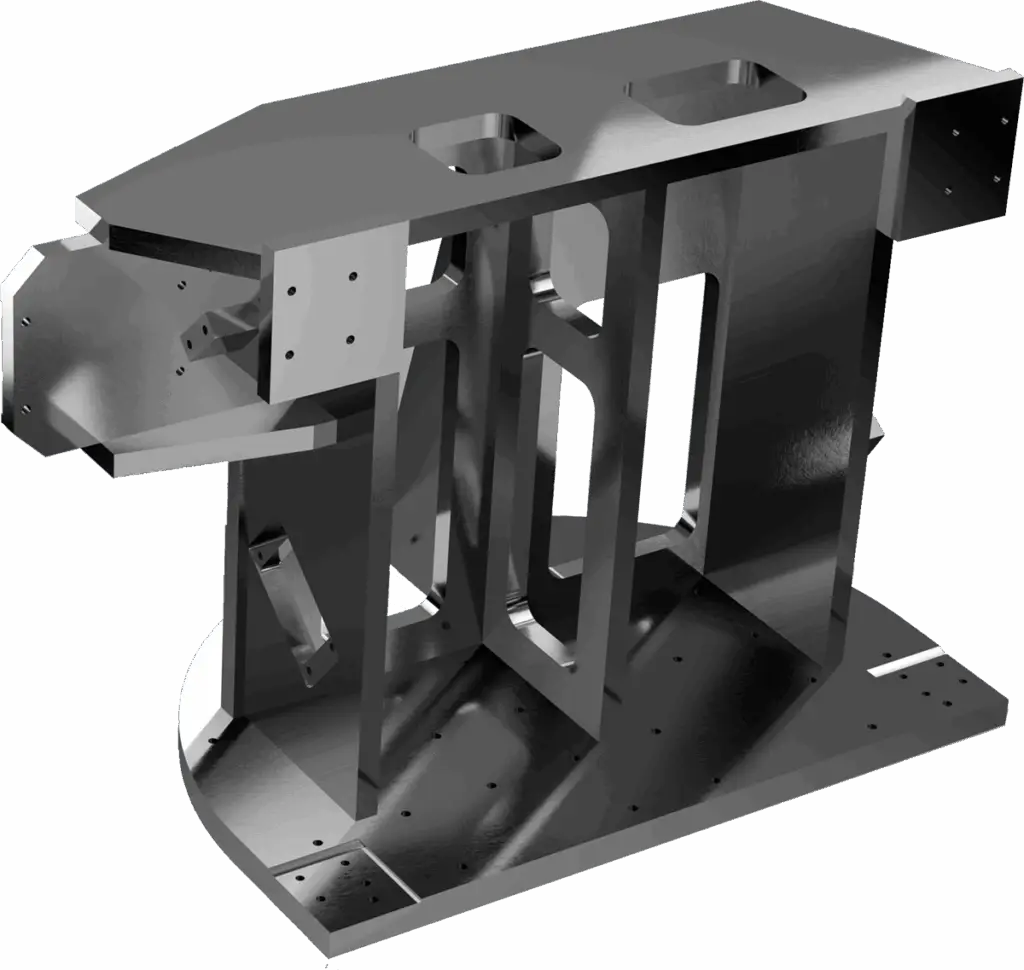
Our magnesium L&T weldments enable high-stiffness vibration test fixtures capable of true three-axis vibration testing on vertical shakers—without the need to rotate the system into a horizontal position. These vibration fixtures also support vertical-axis testing on a slip table without reorientation, streamlining setup and minimizing handling time.
By eliminating time-consuming alignment procedures for axis changes, this vibration fixture design reduces setup variability, saves labor hours, and improves test repeatability. Custom mounting hole patterns can be provided to accommodate virtually any shaker or slip table configuration.

| L Type Magnesium Fixtures | |
|---|---|
|
Part No. |
Working Area |
|
6310 |
10″ W x 10″ H |
|
6312 |
12″ W x 12″ H |
|
6314 |
14″ W x 14″ H |
|
6316 |
16″ W x 16″ H |
|
6318 |
18″ W x 16″ H |
|
6320 |
20″ W x 16″ H |
|
6322 |
22″ W x 16″ H |
|
6324 |
24″ W x 16″ H |
| T Type Magnesium Fixtures | |
|---|---|
|
Part No. |
Working Area |
|
6410 |
10″ W x 10″ H |
|
6412 |
12″ W x 12″ H |
|
6414 |
14″ W x 14″ H |
|
6416 |
16″ W x 16″ H |
|
6418 |
18″ W x 16″ H |
|
6420 |
20″ W x 16″ H |
|
6422 |
22″ W x 16″ H |
|
6424 |
24″ W x 16″ H |
Magnesium Cubes
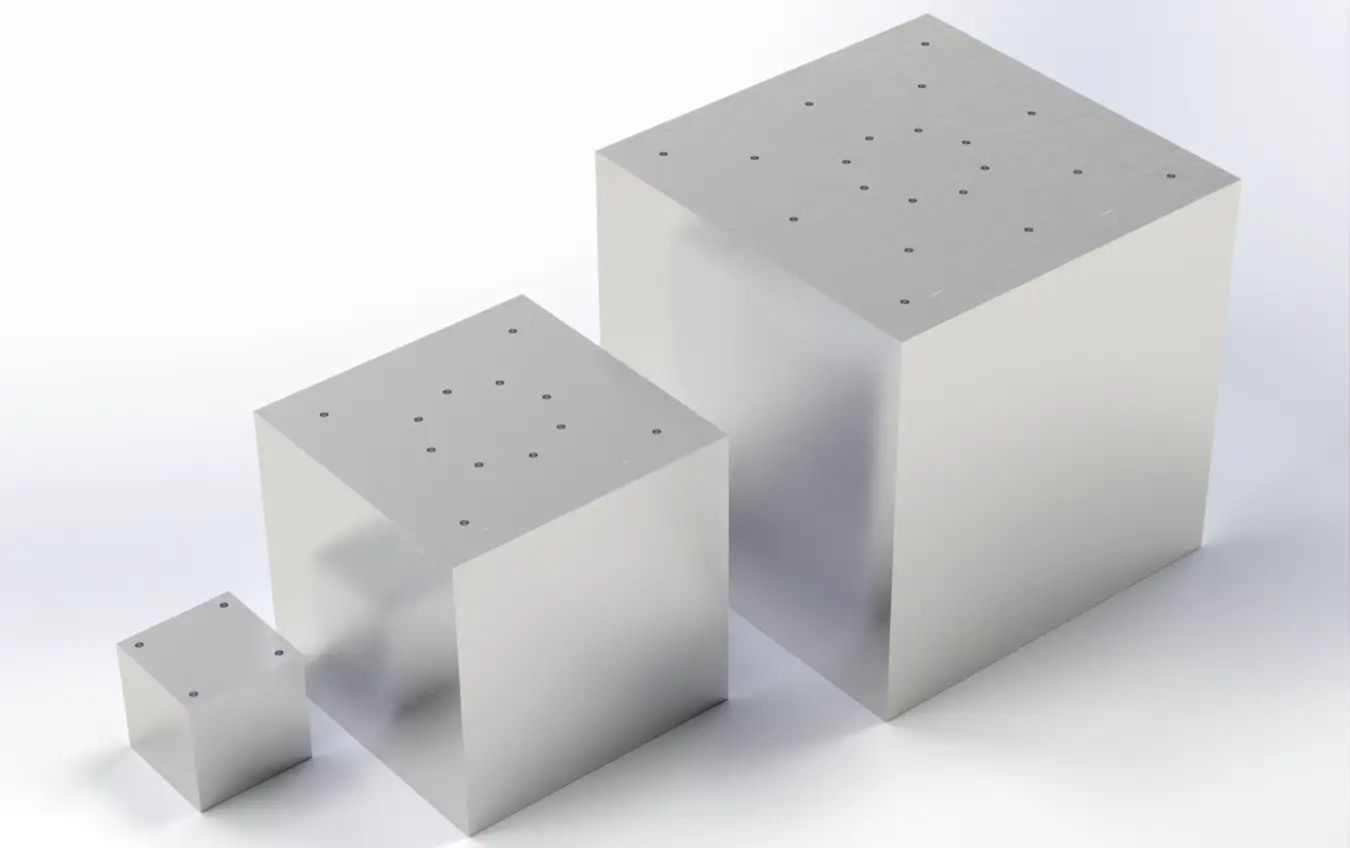
Our magnesium cubes are engineered for efficiency and precision. The solid magnesium vibration cubes feature five mounting surfaces—four sides plus the top—maximizing product throughput for three-axis vibration testing. The high-strength magnesium construction provides excellent dynamic integrity, making these cubes ideal for the most demanding test profiles.
Custom mounting hole patterns for magnesium cubes can be provided to accommodate virtually any shaker or slip plate configuration.
| 6200 Series Magnesium Cubes | ||
|---|---|---|
|
Part No. |
Size |
Approximate Weight |
|
6206 |
6″ x 6″ x 6″ |
14 lbs. |
|
6208 |
8″ x 8″ x 8″ |
33 lbs. |
|
6210 |
10″ |
65 lbs. |
|
6212 |
12″ |
112 lbs. |
|
6214 |
14″ |
178 lbs. |
|
6216 |
16″ |
266 lbs. |
|
6322 |
18″ |
379 lbs. |
|
6220 |
20″ |
520 lbs. |
Comprehensive Vibration Testing Solutions
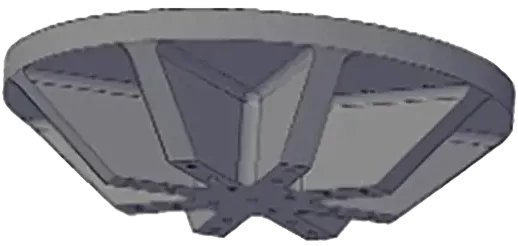
- Head Expanders & Head Plates – Our magnesium head expanders and plates provide universal mounting surfaces, enabling both horizontal and vertical testing orientations. These components are essential for accommodating various test items and configurations while maintaining structural integrity.
- Slip Tables & Guidance Systems – Our slip tables provide a robust interface between the shaker and the horizontal test platform, improving stability and dynamic response. Guidance systems offer additional cross-axis restraint, protecting the shaker’s armature and ensuring precise vertical motion.
- L-Fixtures & Cubes – Designed for multi-axis vibration testing, our L-fixtures and test cubes provide stable mounting solutions to support complex testing needs. These fixtures allow for flexibility in DUT positioning while minimizing vibrational interference.
- Custom Vibration Fixtures – We recognize that unique testing scenarios require specialized solutions. As a vibration fixture manufacturer with inhouse engineering capabilities, eMpulse designs custom vibration test fixtures tailored to specific frequency ranges, payloads, and test standards. Our use of finite element analysis (FEA) ensures each vibration fixture meets the exacting demands of your testing environment.
Comprehensive Vibration Testing Solutions
Beyond our standard fixtures, eMpulse offers a full suite of products to enhance your testing capabilities.
- Head Expanders & Head Plates – Our magnesium head expanders and plates provide universal mounting surfaces, enabling both horizontal and vertical testing orientations. These components are essential for accommodating various test items and configurations while maintaining structural integrity.
- Slip Tables & Guidance Systems – Our slip tables provide a robust interface between the shaker and the horizontal test platform, improving stability and dynamic response. Guidance systems offer additional cross-axis restraint, protecting the shaker’s armature and ensuring precise vertical motion.
- L-Fixtures & Cubes – Designed for multi-axis vibration testing, our L-fixtures and test cubes provide stable mounting solutions to support complex testing needs. These fixtures allow for flexibility in DUT positioning while minimizing vibrational interference.
- Custom Vibration Fixtures – We recognize that unique testing scenarios require specialized solutions. As a vibration fixture manufacturer with inhouse engineering capabilities, eMpulse designs custom vibration test fixtures tailored to specific frequency ranges, payloads, and test standards. Our use of finite element analysis (FEA) ensures each vibration fixture meets the exacting demands of your testing environment..
Advantages of eMpulse Vibration Fixtures
Resonance-Free Design for Accurate Test Results
Engineered to eliminate unwanted frequencies and fixture flex through optimized vibration fixture design and material selection.
Custom and Standard Solutions
From off-the-shelf designs to fully customized fixtures, we meet the exact needs of your testing requirements.
Built for Mission Critical Testing
Supporting automotive, aerospace, defense, and industrial applications where reliability is essential.
Optimized Material Selection
Using aluminum, magnesium, and high-dampening alloys to reduce vibration fixture mass loading and minimize influence on the device under test (DUT).
Advanced Coating and Surface Treatments
We offer specialized coatings to enhance fixture durability and performance under extreme conditions, including anodizing for corrosion resistance, thermal barriers for temperature stability, and vibration-dampening treatments to minimize energy transfer.
Advantages of eMpulse Vibration Fixtures
Resonance-Free Design for Accurate Test Results
Engineered to eliminate unwanted frequencies and fixture flex through optimized vibration fixture design and material selection.
Custom and Standard Solutions
From off-the-shelf designs to fully customized fixtures, we meet the exact needs of your testing requirements.
Optimized Material Selection
Using aluminum, magnesium, and high-dampening alloys to reduce vibration fixture mass loading and minimize influence on device under test (DUT).
Advanced Coating and Surface Treatments
We offer specialized coatings to enhance fixture durability and performance under extreme conditions, including anodizing for corrosion resistance, thermal barriers for temperature stability, and vibration-dampening treatments to minimize energy transfer.
Built for Mission Critical Testing
Supporting automotive, aerospace, defense, and industrial applications where reliability is essential.
Advantages of eMpulse Vibration Fixtures
Resonance-Free Design for Accurate Test Results
Engineered to eliminate unwanted frequencies and fixture flex through optimized vibration fixture design and material selection.
Custom and Standard Solutions
From off-the-shelf designs to fully customized fixtures, we meet the exact needs of your testing requirements.
Optimized Material Selection
Using aluminum, magnesium, and high-dampening alloys to reduce vibration mass loading and minimize influence on the device under test (DUT).
Advanced Coating and Surface Treatments
We offer specialized coatings to enhance fixture durability and performance under extreme conditions, including anodizing for corrosion resistance, thermal barriers for temperature stability, and vibration-dampening treatments to minimize energy transfer.
Built for Mission Critical Testing
Supporting automotive, aerospace, defense, and industrial applications where reliability is essential.
Frequently Asked Questions
Frequently Asked Questions
A vibration test fixture is the mechanical link between the shaker and the device under test. Its job is to hold the test article securely while transmitting vibration as cleanly as possible. In real testing, a fixture is considered successful when it does its job without showing up in the data.
Because the fixture becomes part of the dynamic system. If it is too flexible, too heavy, or poorly shaped, it can change the vibration input and distort results. A well-designed fixture helps ensure the test represents the intended environment rather than the behavior of the fixture itself.
Fixtures can affect results in several ways, including shifting natural frequencies, amplifying or reducing vibration levels, introducing cross-axis motion, or creating uneven load paths. These effects can lead to false failures or, just as problematic, missed issues if they are not controlled.
Aluminum is widely used because it is easy to machine and offers a good balance of stiffness and weight. Magnesium alloys are often chosen for high-frequency applications where minimizing mass loading is critical. Material choice is usually driven by frequency range, payload mass, and stiffness requirements.
Custom fixtures are typically used when the device under test has an unusual geometry, demanding frequency requirements, or needs to be tested in multiple orientations. They are also common when standard fixtures cannot meet stiffness or mass constraints without compromising the test.
You will find vibration fixtures in automotive and electric vehicle validation, aerospace and avionics testing, defense qualification programs, industrial equipment testing, and consumer electronics reliability work. Any industry that runs vibration tests depends on fixtures that behave predictably.
Resonance is managed through careful design and analysis. This usually includes finite element analysis, thoughtful geometry and mass distribution, selection of high-stiffness materials, and proper interface design between the fixture, shaker, and test article.
L-fixtures and T-fixtures allow multi-axis testing without repeatedly remounting the device under test, which saves time and reduces handling risk. Vibration cubes provide multiple mounting faces for three-axis testing and are often used when throughput and repeatability are priorities. The right choice depends on orientation needs and test efficiency goals.
Sometimes, but it should never be assumed. A fixture may be reusable if the mass, mounting pattern, and frequency requirements are similar, but each reuse needs to be evaluated. A fixture that works well for one test can introduce problems in another if conditions change.
Fixture performance is typically validated using a combination of finite element analysis, modal testing, and engineering review. These steps help confirm stiffness, frequency response, and structural integrity before the fixture is put into service.