
Electrodynamic Shaker Refurbishment and Repair
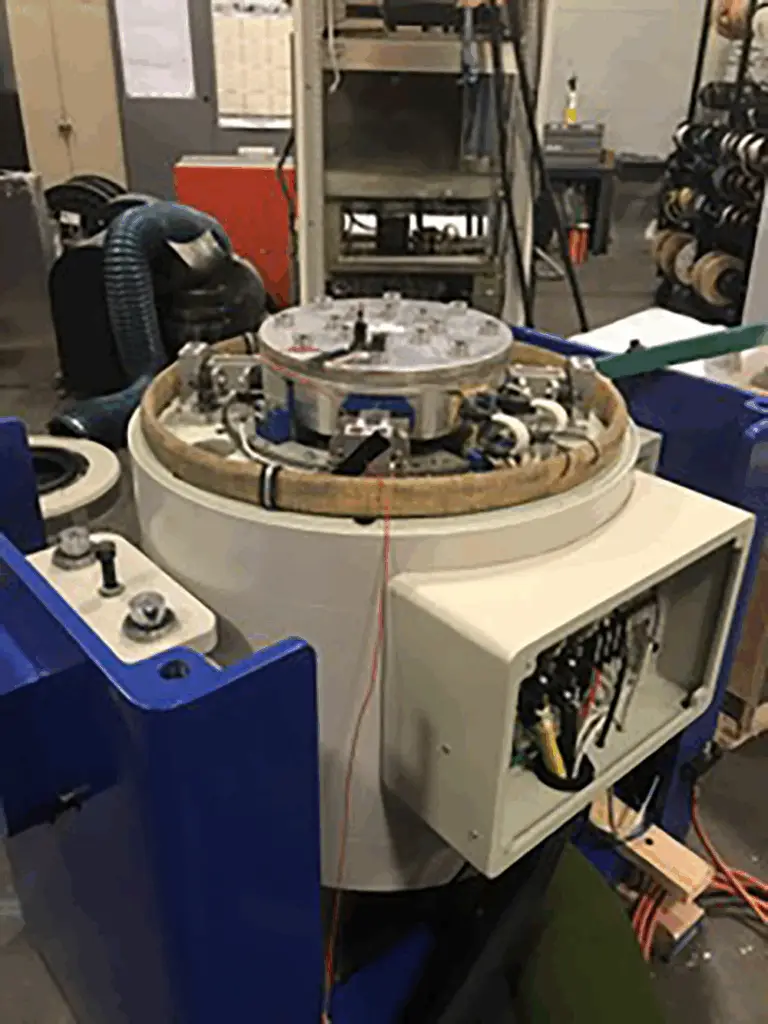
Electrodynamic Shaker Repair and Refurbishment
Refurbishments and Service
eMpulse Test Systems provides comprehensive refurbishment, maintenance, and repair services for electrodynamic shaker systems—including both traditional electromagnetic and servoelectric configurations. Our experienced engineering team ensures systems are restored to optimal performance, extending service life while reducing unplanned downtime.
eMpulse provides complete refurbishment services for electrodynamic shaker systems, offering a cost-effective alternative to new equipment. Each system includes a one-year warranty and is upgraded with current control technology. Our refurbishment process is designed to restore full functionality and extend service life, supported by a strong record of reliable performance in the field. Customer references are available upon request.
Refurbished systems undergo a full mechanical teardown, with every component disassembled, inspected, and evaluated for wear or damage. Parts are replaced or rebuilt as needed to ensure the system meets original performance specifications.
Supported Brands:
- LDS
- Brüel & Kjær
- Unholtz-Dickie
- IMV
- ETS Solutions
- TIRA
- And others
Supported Systems
- Vertical-only and vertical-horizontal (V/H) configurations
- Air-cooled and water-cooled systems
- Integrated slip table assemblies
- Amplifier and controller package
Complete the form to contact us with service requests for ED Shakers.
Fields marked with an asterisk (*) are required.
Refurbishment Process
Mechanical Refurbishment Includes:
- Complete system disassembly and cleaning.
- Inspection of all flexures, shear mounts, and centering systems
- Replacement of bearings, bearing shafts, and worn components
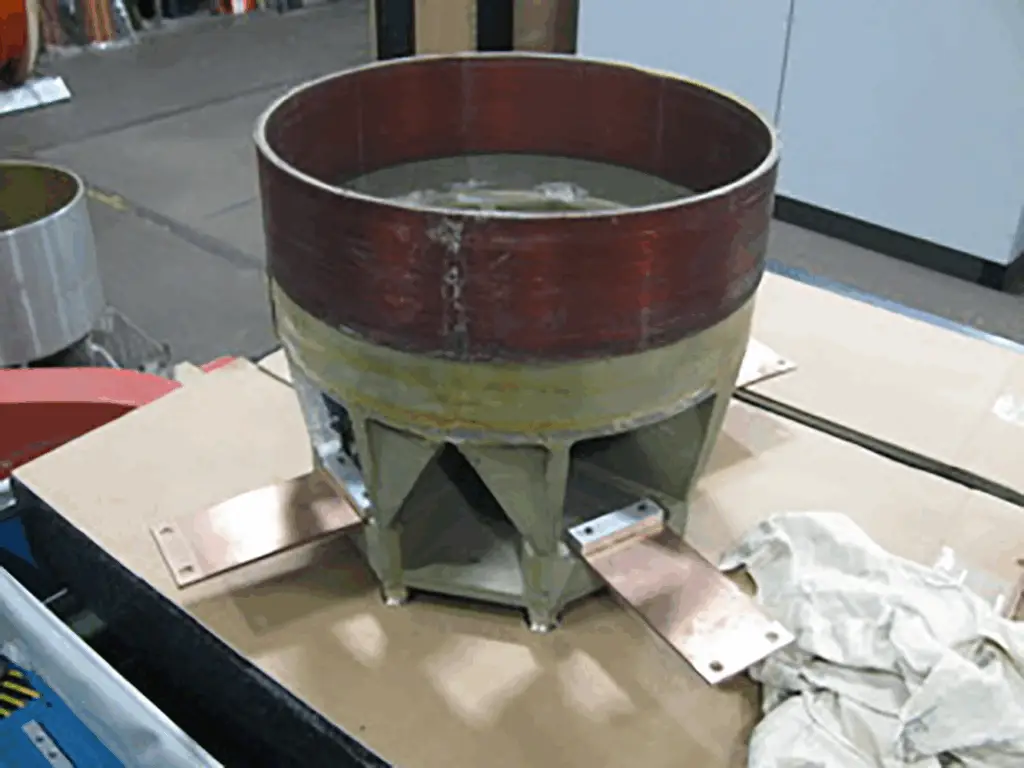
- Armature and field coil inspection
- Terminal and connection integrity checks
- Final assembly, system alignment, and customer-specific repainting
- Operational verification using customer-supplied profiles
Electrical Diagnostics & Calibration Services:
- Amplifier, field supply, and control electronics inspection and repair
- Fault isolation using calibrated diagnostic tools
- Recalibration of sine, random, and shock profiles
- Fine-tuning for compatibility with specific test protocols
- Verification of safety interlocks and integration with updated amplifier systems
Preventive Maintenance & Emergency Support:
- Scheduled maintenance programs include thermal imaging, alignment checks, and vibration signature analysis
- Fast-response repair services to reduce downtime and restore test capability quickly
Frequently Asked Questions
At a basic level, a load frame applies controlled force or displacement to a test article. In real-world use, they’re most often used to validate strength, durability, and fatigue performance of components or assemblies under well-defined loading conditions, especially when repeatability and clean data matter more than full system simulation.
A servoelectric load frame uses an electric actuator instead of a hydraulic piston to generate load. This approach enables highly precise digital control, quieter operation, and a much cleaner test environment. Modern servoelectric systems are capable of delivering substantial force while maintaining exceptional control and efficiency. For many applications—especially indoors or in shared lab spaces—these practical advantages make servoelectric technology an attractive alternative.
Servoelectric systems are commonly selected when precise control, lower maintenance, and energy efficiency are important. Without hydraulic infrastructure, they provide a cleaner and quieter test environment while still delivering high force and dynamic performance for many durability and component testing applications.
These frames are commonly used for durability and fatigue testing, accelerated life testing, and structural evaluations. They’re especially effective when test conditions are well defined and the goal is to generate consistent, repeatable results rather than replicate every real-world variable at once.
Yes — long-duration testing is actually one of their strengths. Because servoelectric systems don’t rely on fluid power, they tend to have stable control characteristics over time with virtually no drift, making them well suited for extended fatigue or endurance tests.
They offer very high resolution and repeatability thanks to closed-loop digital control and high-quality feedback sensors. More importantly, that precision is consistent — the system behaves the same at the beginning of a test as it does after thousands or millions of cycles.
They can, and often are. Load frames are commonly used in production environments where automated or semi-automated testing is needed to verify strength or durability without slowing throughput. Their consistency makes them easier to standardize across stations.
Force capacity depends on the actuator and frame configuration. Systems range from lower-force setups for component testing to higher-force frames designed for structural applications. In most cases, the best system is one sized specifically to the test — not the biggest frame available.
Repeatability comes from a combination of rigid mechanical design, closed-loop digital control, and continuous feedback of force and displacement. Just as critical is proper test setup — fixturing and control strategy play a big role in getting consistent data.
You’ll find them across automotive, aerospace, industrial manufacturing, and R&D environments. Anywhere engineers need reliable load testing without the complexity of hydraulic systems, servoelectric load frames tend to be a practical choice.
Frequently Asked Questions
Refurbishment usually starts with a full teardown and inspection of the shaker. Worn mechanical components are replaced, electrical systems are evaluated, and the shaker is recalibrated. In many cases, control hardware or software is also updated so the system performs reliably with current test requirements.
Refurbishment is a good option when the shaker frame, armature, and core structure are still in good condition but performance, reliability, or controls are limiting uptime. In those cases, refurbishment can restore capability without the cost or disruption of buying a new system.
Most electrodynamic and electromagnetic shaker systems can be serviced. This includes air-cooled and water-cooled designs, vertical-only and vertical-horizontal systems, and setups with slip tables. The exact scope depends on system condition and configuration.
Yes. Proper refurbishment is intended to restore the system to meet original manufacturer specifications. In some cases, performance can be improved beyond the original configuration through updated components and modern controls.
They often are. Refurbishment projects commonly include inspection and repair of amplifiers, field power supplies, and controllers. When appropriate, control systems may be upgraded to improve reliability and compatibility with modern software and test profiles.
Timelines vary based on system condition and how extensive the work is. Even so, refurbishment is typically completed faster than sourcing and installing new vibration equipment, with less disruption to the lab.
Yes. Refurbished systems can be paired with current control technology to support sine, random, shock, and custom vibration profiles used in modern development, qualification, and screening programs.
Yes. Refurbished electrodynamic shakers are typically delivered with a one-year warranty covering workmanship and restored components, providing confidence in the rebuilt system.
Automotive, aerospace, defense, industrial equipment, and electronics manufacturers commonly refurbish shakers to extend equipment life while maintaining test capability and uptime.
Preventive maintenance helps identify wear, alignment issues, and thermal concerns before they lead to failures. Regular inspections and service can significantly reduce unplanned downtime and extend the overall service life of a shaker system.