Sustainability
Sustainability of Servoelectric Actuation
Servoelectric actuation requires less energy, operates without hydraulic fluid, and requires fewer components to maintain. Our systems significantly lower power usage, eliminate fluid waste, and reduce overall environmental impact. By eliminating pumps, valves, and fluid lines, servoelectric actuation simplifies operations and reduce the resources needed over their lifetime.
Sustainability of Servoelectric Actuation
Servoelectric actuation requires less energy, operates without hydraulic fluid, and requires fewer components to maintain. Our systems significantly lower power usage, eliminate fluid waste, and reduce overall environmental impact. By eliminating pumps, valves, and fluid lines, servoelectric actuation simplifies operations and reduce the resources needed over their lifetime.
Energy Efficiency
Reducing Power Consumption by Over 80%
One of the most immediate environmental benefits of SEA technology is the complete elimination of hydraulic fluids. Hydraulic systems are notorious for leaks, contamination risks, and costly fluid disposal, which pose both environmental and regulatory challenges. SEA systems remove these hazards entirely, reducing maintenance costs, preventing workplace contamination, and eliminating the financial and reputational risks associated with hydraulic spills. This also simplifies compliance with environmental safety regulations, making SEA an inherently greener and lower-maintenance alternative.
Energy Efficiency
Reducing Power Consumption by Over 80%
Eliminating Hydraulic Fluids
A Cleaner, Safer Alternative
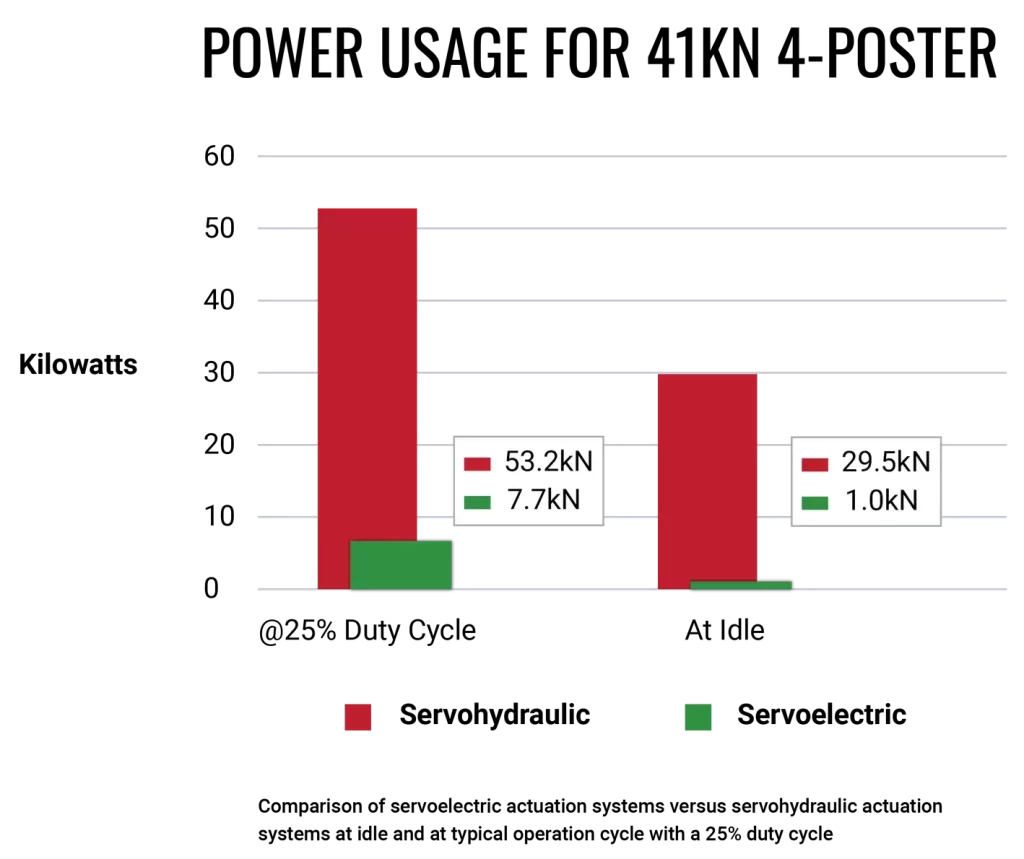
Servoelectric actuation (SEA) systems are fundamentally more energy-efficient than traditional hydraulic systems, delivering superior performance while drastically cutting power consumption. Under typical operating conditions with a 25% duty cycle, SEA systems consume just 7.7kW, a stark contrast to the 53.2kW required by equivalent servo-hydraulic systems. Even during idle periods, SEA systems draw only 1.0kW, compared to the 29.5kW consumed by hydraulic systems. This translates to an operational energy cost less than 20% of a comparable hydraulic system, significantly reducing electricity use and lowering overall carbon emissions.
Eliminating Hydraulic Fluids
A Cleaner, Safer Alternative
Servoelectric actuation (SEA) systems are fundamentally more energy-efficient than traditional hydraulic systems, delivering superior performance while drastically cutting power consumption. Under typical operating conditions with a 25% duty cycle, SEA systems consume just 7.7kW, a stark contrast to the 53.2kW required by equivalent servo-hydraulic systems. Even during idle periods, SEA systems draw only 1.0kW, compared to the 29.5kW consumed by hydraulic systems. This translates to an operational energy cost less than 20% of a comparable hydraulic system, significantly reducing electricity use and lowering overall carbon emissions.
Inherently More Sustainable
Regenerative Energy Recovery & Reduced Heat Generation
SEA systems capture and reuse energy through regenerative braking, a feature absent in traditional hydraulic setups. This process, which recovers energy during deceleration phases, can lead to energy savings of up to 30% in dynamic applications such as load frame testing. Additionally, SEA technology generates significantly less heat than hydraulic counterparts, reducing the need for cooling systems and improving overall efficiency. This not only saves energy but also extends equipment life by minimizing thermal wear and tear.
Lower Noise Pollution: A Safer, More Productive Workplace
Hydraulic pumps and valves generate high levels of noise, often requiring additional acoustic dampening in test environments. In contrast, SEA systems operate at up to 70% lower noise levels, improving workplace safety and reducing noise pollution in testing facilities. This makes SEA-based testing ideal for NVH-sensitive environments, ensuring better testing conditions while enhancing worker comfort.
Extended Equipment Lifespan & Reduced Industrial Waste
SEA systems are designed with fewer moving parts than hydraulic systems, resulting in lower wear and significantly reduced maintenance requirements. This means fewer component failures, longer intervals between servicing, and less industrial waste. Additionally, SEA components, such as the SINAMICS S120 modular servo-drives and Profinet communication architecture, provide higher reliability and system longevity, reducing the need for frequent part replacements.
Optimized for Renewable Energy Applications
Beyond industrial testing, SEA systems are increasingly integrated into renewable energy technologies, enhancing sustainability across multiple industries. In solar energy, SEA-driven tracking systems improve sunlight exposure efficiency. In wind energy, SEA actuators optimize blade positioning and yaw adjustments for maximum power generation. In hydroelectric applications, SEA controls enable precise turbine adjustments for better water flow management. By supporting these renewable technologies, SEA systems contribute to a broader shift toward sustainable energy solutions.
Inherently More Sustainable
Regenerative Energy Recovery & Reduced Heat Generation
SEA systems capture and reuse energy through regenerative braking, a feature absent in traditional hydraulic setups. This process, which recovers energy during deceleration phases, can lead to energy savings of up to 30% in dynamic applications such as load frame testing. Additionally, SEA technology generates significantly less heat than hydraulic counterparts, reducing the need for cooling systems and improving overall efficiency. This not only saves energy but also extends equipment life by minimizing thermal wear and tear.
Lower Noise Pollution: A Safer, More Productive Workplace
Hydraulic pumps and valves generate high levels of noise, often requiring additional acoustic dampening in test environments. In contrast, SEA systems operate at up to 70% lower noise levels, improving workplace safety and reducing noise pollution in testing facilities. This makes SEA-based testing ideal for NVH-sensitive environments, ensuring better testing conditions while enhancing worker comfort.
Extended Equipment Lifespan & Reduced Industrial Waste
SEA systems are designed with fewer moving parts than hydraulic systems, resulting in lower wear and significantly reduced maintenance requirements. This means fewer component failures, longer intervals between servicing, and less industrial waste. Additionally, SEA components, such as the SINAMICS S120 modular servo-drives and Profinet communication architecture, provide higher reliability and system longevity, reducing the need for frequent part replacements.
Optimized for Renewable Energy Applications
Beyond industrial testing, SEA systems are increasingly integrated into renewable energy technologies, enhancing sustainability across multiple industries. In solar energy, SEA-driven tracking systems improve sunlight exposure efficiency. In wind energy, SEA actuators optimize blade positioning and yaw adjustments for maximum power generation. In hydroelectric applications, SEA controls enable precise turbine adjustments for better water flow management. By supporting these renewable technologies, SEA systems contribute to a broader shift toward sustainable energy solutions.